Why New Braunfels’ Hard Water Is Tougher on Your Pool Than You Think
If you’ve owned a pool in New Braunfels for more than a season, you’ve probably noticed something that pool owners in other parts of the country rarely deal with: a stubborn white, chalky buildup along the tile line, cloudy water that won’t quite clear up, and a filter that seems to need cleaning more often than it should. Most of the time, the culprit isn’t a mistake you made — it’s what’s coming out of the tap.
Why New Braunfels Water Is So Hard
New Braunfels sits on limestone-heavy ground fed by the Edwards Aquifer, one of the most productive groundwater sources in Texas. As water moves through that limestone bedrock, it picks up dissolved calcium and magnesium along the way — the same minerals that make water “hard.” By the time it reaches your pool through the fill line, New Braunfels tap water carries a noticeably higher mineral content than water in many other regions.
That’s good news for the taste of your drinking water in some ways. It’s less good news for your pool.
What Hard Water Actually Does to a Pool
- Calcium scaling — a white, crusty buildup that forms along the tile line and inside plumbing and equipment over time
- Cloudy water — excess calcium can make water look hazy even when chlorine and pH are properly balanced
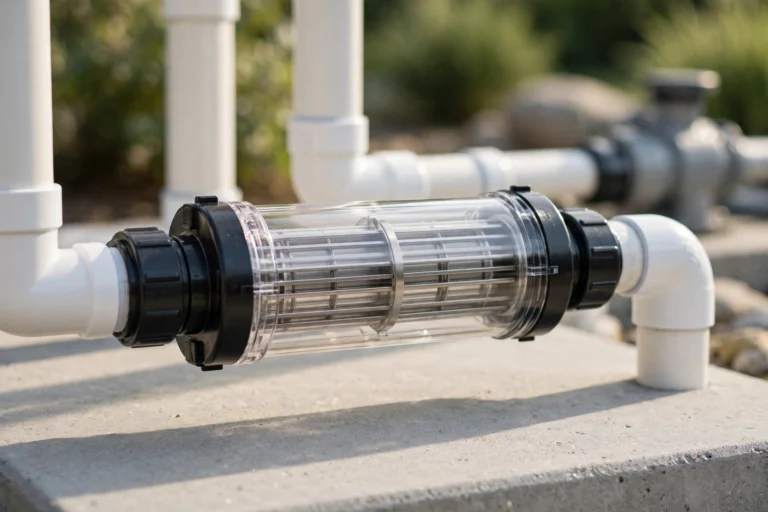
- Reduced equipment lifespan — scale buildup inside heaters, filters, and salt cells makes them work harder and wear out faster
- Rougher pool surfaces — scaling on plaster or tile can make surfaces feel gritty over time
Why This Matters More Than Most Pool Owners Realize
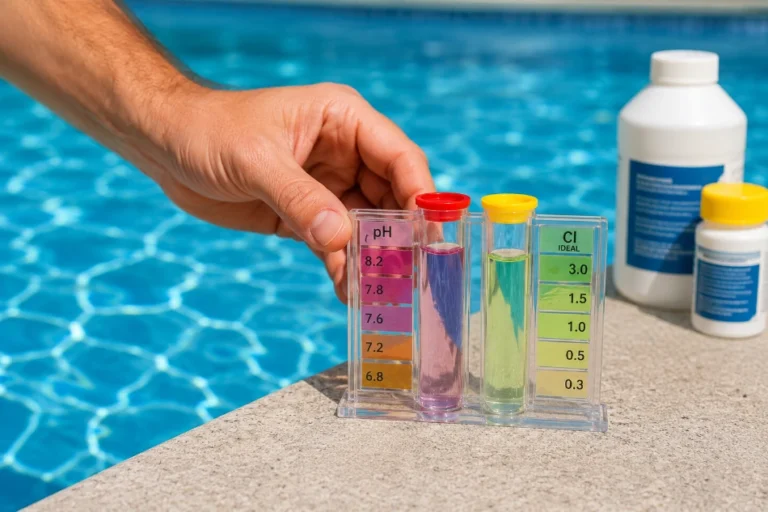
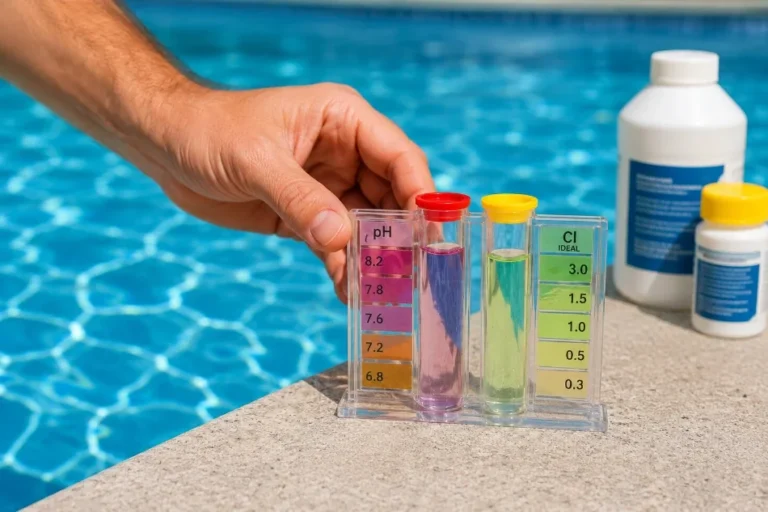
Most standard pool maintenance checklists focus on the basics: chlorine, pH, and alkalinity. That’s necessary, but incomplete for a New Braunfels pool. Without regularly testing calcium hardness specifically, scaling can build up gradually and go unnoticed until it’s already affecting equipment performance or visibly staining tile — at which point it’s a bigger job to correct than it would have been with early testing.
What Homeowners Can Do About It
- Test calcium hardness regularly — not just chlorine and pH — as part of routine water testing.
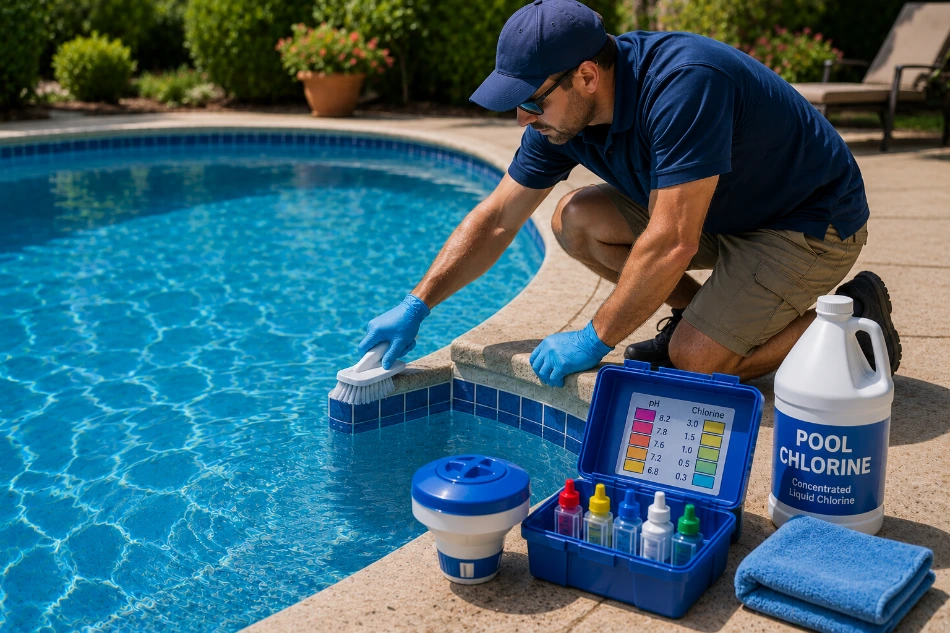
- Brush tile lines weekly to prevent early scale deposits from hardening into a stubborn buildup.
- Consider a sequestering agent in your chemical routine, which helps keep dissolved minerals from binding together and forming scale.
- Have equipment checked periodically for internal scale buildup, especially heaters and salt cells, which are particularly vulnerable.
Live outside the city on a well? See our guide to well water stains and scale.
The Bottom Line
Hard water isn’t something you can fix at the source — it’s simply a fact of living in New Braunfels. But it is something a proper maintenance routine can manage, as long as calcium hardness is actually part of that routine. It’s one of the reasons a generic, one-size-fits-all pool care checklist doesn’t quite work here the way it might in a region with softer water.